

Can Customers Find Your Business With a Photo? How an SEO Agency Prepares You for Visual Search
.png)
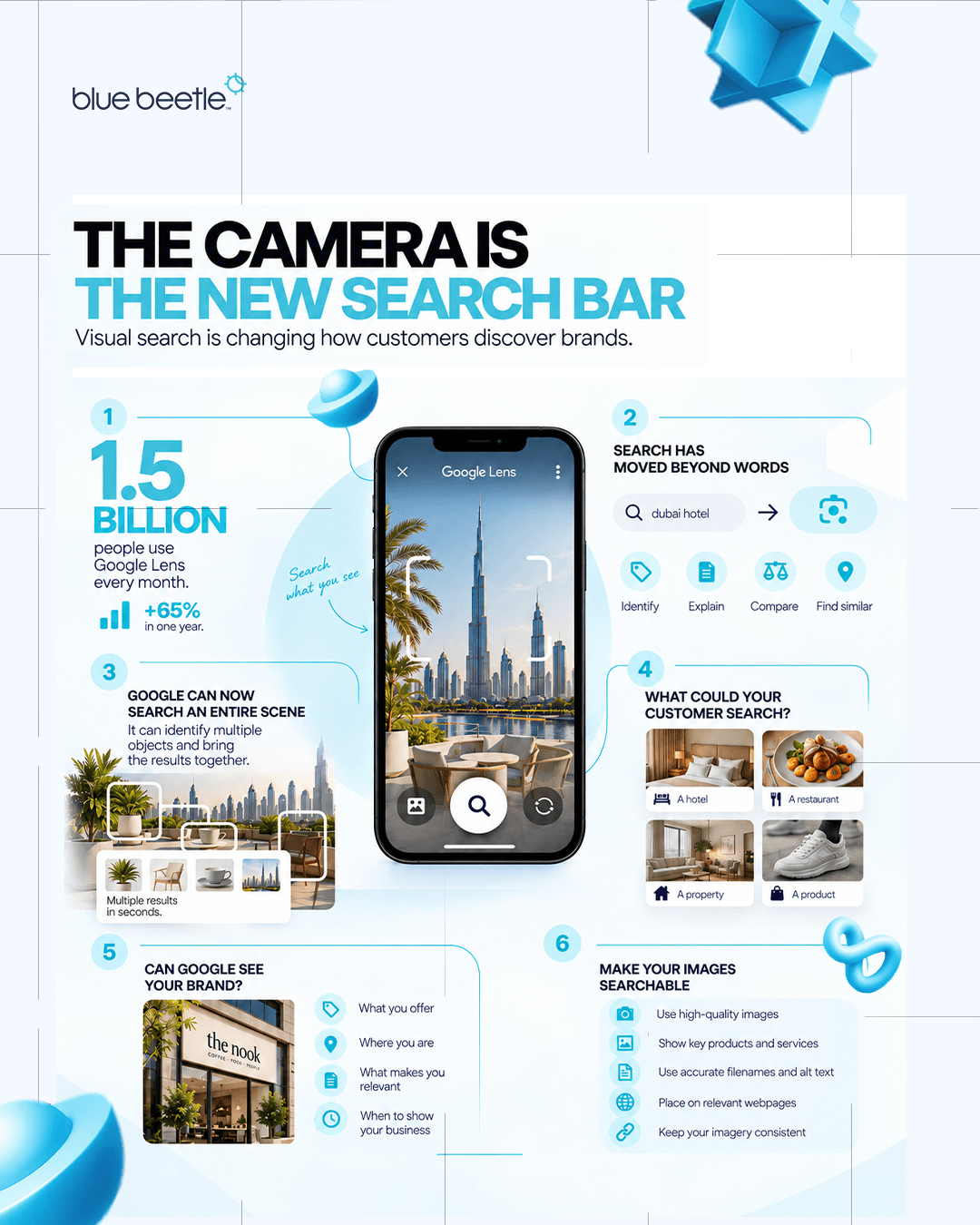
A customer sees a hotel lobby, an office interior, a building facade, or a service in progress. Instead of describing it in a search box, they point their camera at it. Google Lens can identify what is visible, interpret the surrounding scene and connect the customer with information, comparisons and businesses that appear relevant.
This is no longer a niche search behaviour. Google's most recently published scale figure says Lens is used for nearly 20 billion visual searches each month, with queries among 18 to 24-year-olds growing particularly quickly. For a business, the opportunity is not simply to upload more photographs. It is to make useful images clear enough for people and search systems to connect what is pictured with the right service, location and next step. A capable SEO agency should therefore treat visual discovery as part of website optimisation, not a separate design exercise.
Why Visual Search Changes What You Need From an SEO Agency
Text search begins with language. Visual search begins with an object, place, style or situation that the customer may not know how to describe. A visitor can photograph a restaurant interior and look for similar venues, capture a building and identify the property, or use an image of a treatment or service result to understand what they are seeing. They can then add a spoken or typed question to narrow the intent.
This changes the path into a website. The first point of recognition may be a feature in the image rather than the company name or a keyword. Google can also interpret several elements within a scene, so a single image may lead to more than one line of discovery. A rooftop photograph might convey the venue, view, furniture, setting, and location at once. An SEO agency must therefore consider a broader commercial question: if a customer searches for something visible in your real-world experience, does your digital presence provide enough evidence to connect that scene with your brand?
Choose Images That Answer a Buying Question
Many websites use imagery as decoration. A generic stock photograph may support a page's mood, but it cannot convey what is distinctive about the business. Visual search makes that weakness more important because the image itself can become part of the query. Searchable imagery should help a customer identify, assess or compare something they care about.
A hotel should show recognisable room types, views, shared spaces and access points. A property developer should show real finishes, layouts, amenities and the relationship between the development and its surroundings. A professional service business can show its people, working environment, process and tangible outputs. These images do not need to look clinical, but they should reveal something commercially useful that the page copy can then explain.
Build the image plan around the questions customers ask before they enquire. If location matters, show the approach and nearby context. If quality is difficult to judge, show detail. If implementation feels risky, show the process and people involved. This gives photography a defined role in the buying journey rather than treating it as a space to fill.
How an SEO Agency Makes Images Searchable
A strong photograph is not self-explanatory to a search engine. Google says it uses the page content, captions, image titles, alt text and computer vision together to understand an image. Its current guidance also recommends placing images near relevant text and using short, descriptive filenames. This means the page around the image matters as much as the file itself.
An image named IMG_4821.jpg with alt text such as 'hotel' leaves most of its meaning unstated. A filename and description that identify the actual room type, view, or service provide the system with more useful context, as long as the wording is accurate and natural. Alt text should describe the image for someone who cannot see it, not become a container for repeated keywords.
The landing page must then confirm the same facts. If the image shows a meeting room in Business Bay, the surrounding heading and copy should explain the space, capacity, location and relevant offer. This alignment between picture and page helps the customer move from recognition to evaluation. It also complements broader AI search work by giving search systems a clearer entity, context and source to interpret.
This is where website optimisation turns a strong visual asset into a useful search asset. The image, descriptive information, and landing page must all reinforce the same meaning, rather than leaving Google to infer business relevance from pixels alone.
Run a Practical Website Optimisation Audit for Images
Start with the pages closest to revenue rather than attempting to rename every image in the media library. Review core service, location, property, venue and campaign pages, then check whether each important image meets these conditions:
- It shows a real product, service, place, person or outcome that matters to the customer's decision.
- The file uses a short, descriptive name instead of a camera-generated code or vague label.
- The alt text accurately describes what is visible without keyword stuffing or promotional claims.
- The image sits beside copy that explains its meaning, relevance, location or distinguishing feature.
- It is embedded with a standard HTML image element, has a crawlable source URL and appears in an image sitemap where appropriate.
- It is sharp enough to understand, compressed for speed, and responsive across different screen sizes.
- The page identifies a preferred representative image through suitable metadata or structured data.
This website optimisation audit brings creative, content, and technical decisions together in one place. It also prevents a common mistake: improving filenames and alt text while leaving the actual image generic, or commissioning excellent photography that the website makes difficult to discover.
Connect Website Images With Local Proof
For businesses with physical locations, the website is only one source of visual evidence. Google Business Profile photographs help customers recognise the exterior, understand the interior, and see representative services before visiting. Google's own photo advice recommends accurate, well-lit images that represent reality, including views from the directions customers approach.
Consistency does not mean using one photograph everywhere. It means that the facade, location name, room type, service description, and brand identity are consistent across the website, Business Profile, and other authoritative listings. When a visual query leads to the business, the customer should not encounter conflicting names, outdated interiors or location details that create doubt.
Measure Whether Visual Discovery Is Growing
Google does not provide a comprehensive report showing every Lens interaction involving your brand. Avoid inventing a visual-search success metric from ordinary organic traffic. Instead, establish a baseline for the signals you can observe and connect them with business outcomes.
In Search Console, the Performance report can be filtered to image results. Track impressions, clicks, queries and landing pages before and after priority images are improved. Review whether image-led pages generate engaged visits, enquiries, bookings or assisted conversions. For local businesses, monitor Business Profile views and actions, as well as changes to the photo set. Run occasional reverse-image checks separately to identify reuse and attribution opportunities rather than confusing that task with customer discovery.
The goal is not to attribute every sale to a picture. It is to learn which visual assets earn visibility, which pages convert that attention, and where the customer journey breaks down. A commercially focused SEO agency should use that evidence to shape the next photography brief and the next round of page improvements.
Make the Things Customers Notice Easier to Find
Visual search does not replace written search. It expands the number of ways a customer can express intent. Businesses that prepare well will connect real-world details with accurate images, useful page content, technical accessibility and a clear conversion path. Those who treat imagery only as decoration may appear polished yet remain difficult for search systems to understand.
Blue Beetle can audit how your website presents and explains its most valuable visual assets, then prioritise the changes most likely to improve discovery and conversion. If customers should be able to find your business from what they see, contact Blue Beetle about working with an SEO agency that can connect image strategy with practical website optimisation.
Related posts
.png)
.png)
.jpg)
.jpg)
.jpg)
.jpg)
Need your own solid online presence with a lucrative inbound funnel?
Tell us what your goals and objectives are, and we’ll help you hit them 🎯.